
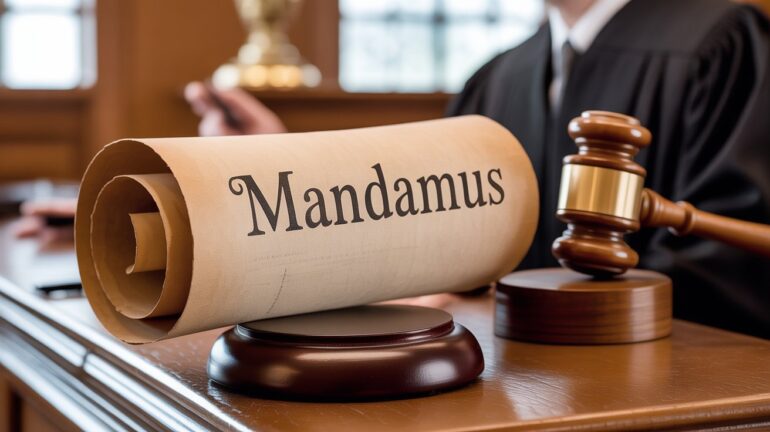
What Is a Writ of Mandamus?
A Legal Command with Ancient Roots
Centuries before today’s tangled bureaucracies, there existed a simple Latin phrase that carried undeniable power: mandamus – “we command.” Born in English common law, this writ was the people’s legal sword, giving them a way to compel the powerful to act when they refused to. That same legal tradition now lives in modern courts as the writ of mandamus – a forceful directive from a court that says: Do your job.
How It’s Defined Today
In plain terms, a writ of mandamus is a court order that tells a government official or agency to carry out a legal duty they are unlawfully ignoring. It doesn’t create new rights. It doesn’t change policy. It enforces the law already in place – a mechanism to break silence when duty is being dodged.
When Do People Use It?
A Remedy for Delay and Dead Ends
Imagine waiting for years on an immigration decision. Or watching your case linger in legal limbo with no movement, no updates, no reason. That’s where this writ steps in. It’s commonly used to push federal agencies like USCIS to act on long-pending applications. It can also nudge judges or officials who have stalled without justification.
Other situations include:
- Local boards ignoring their legal mandates
- Courts failing to address motions
- Agencies withholding approvals required by statute
But It’s Not a Free-for-All
You can’t file a writ just because you’re unhappy with a decision. It only applies when:
- The action you’re asking for is clearly required by law
- The government is refusing to act at all
- You have no other legal route left
It’s legal leverage – but only when the law is on your side, and the system isn’t moving.
How Do Courts Decide If It Applies?
A High Bar for an Extraordinary Tool
Courts treat mandamus petitions with surgical caution. The reason? They don’t want to flood the legal system with demands that belong elsewhere. The burden is on you to prove that:
- You have a clear right to what you’re asking
- The official or agency has a clear legal duty to do it
- There’s no other way to resolve the issue
The writ isn’t a shortcut. It’s the last card you play when all others have failed.
What Judges Look At
- Has the delay gone far beyond reason?
- Is the issue time-sensitive or harming someone’s rights?
- Is the law being ignored, or just slowly followed?
A petition that’s grounded in emotional frustration won’t cut it. You need evidence, legal clarity, and a paper trail.
Real Examples: When This Writ Makes Noise
At the Federal Level
Mandamus is a favorite tool in immigration law. Green card delays. Naturalization holdups. FOIA requests stalled for years. Federal courts hear mandamus cases because these aren’t about opinions – they’re about action being unlawfully withheld.
At the State Level
State courts use mandamus to force school boards to release public documents. To push election offices to certify results. Or to require agencies to follow transparency laws.
Legal Precedents That Set the Standard
- Cheney v. U.S. District Court: Reminded everyone that this writ is rare – but real.
- TRAC v. FCC: Created the yardstick for measuring government delay.
These cases underscore one truth: The writ of mandamus is real law, not legal folklore.

Why Knowing the Definition Gives You Power
For the Overlooked and Ignored
Most people feel helpless when the government doesn’t respond. But this definition – this ancient tool – changes that. It tells you that the law already sees your frustration. And more importantly, it gives you a way to fight back using that very law.
A Quiet Weapon in the Legal Arsenal
Immigration attorneys use this writ strategically. They’re not filing just to win a case – they’re filing to wake up a sleeping bureaucracy. Often, once a mandamus petition hits the court, the agency moves faster, not because they want to … but because they’d rather avoid defending their delay in front of a judge.
Products / Tools / Resources
- Sample Writ Templates: Search for “[State/Federal] Mandamus Petition Sample“
- USCIS Case Tools: USCIS Case Status Tracker